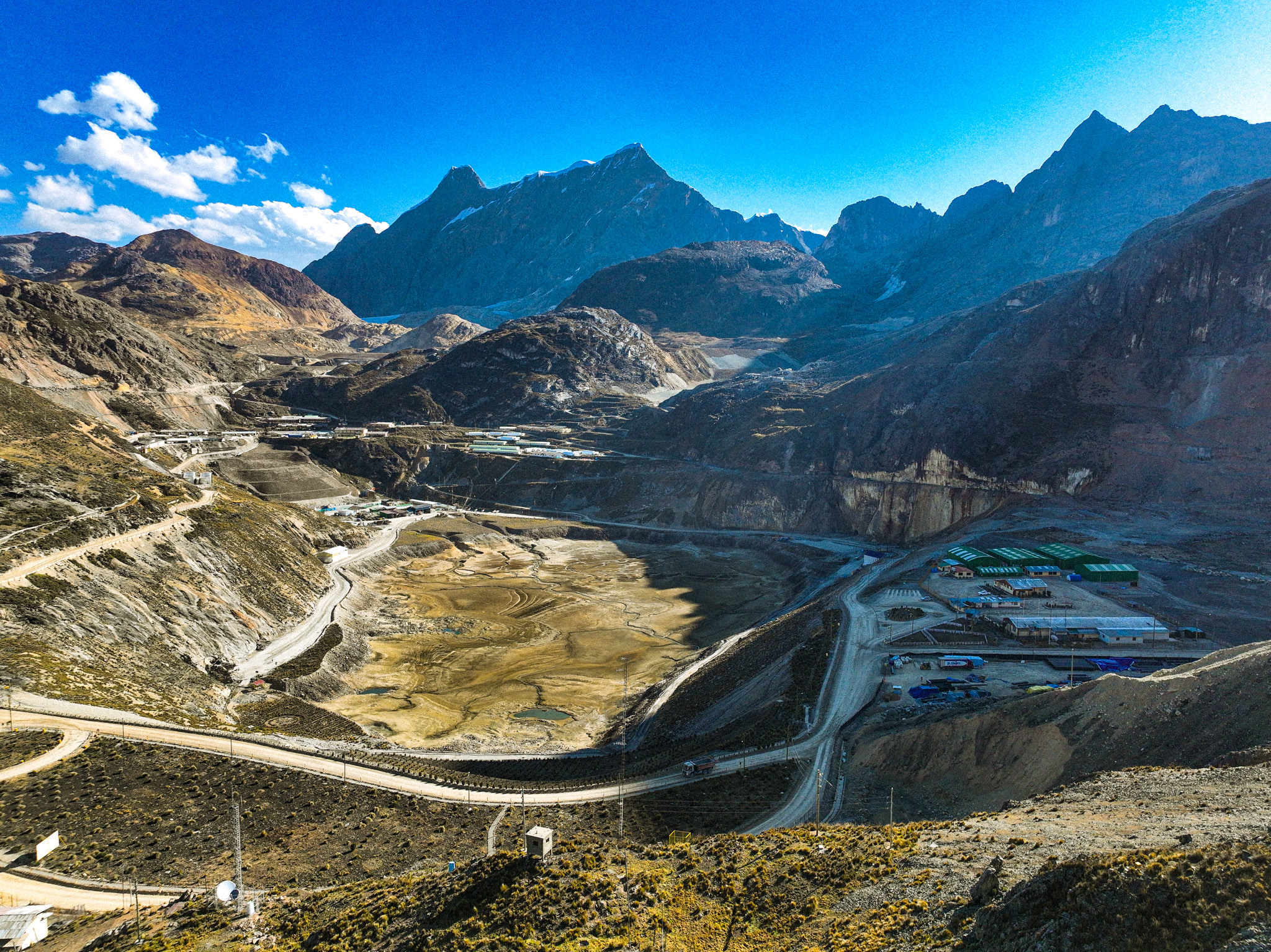
Ore extraction by open pit excavations and blasting can generate exposure of sulphide minerals which could potentially generate acid drainage. Since several methodologies of pit slope waterproofing, which avoid the acid drainage activation, imply significant impacts on costs, it is necessary to perform an economic analysis of closure plan alternatives.
In order to assess the cost evaluations of an open pit closure project located in southern Peru, the pit is divided into two sectors: upper sector and lower sector. In the upper zone, the comparative cost will be made between two alternatives, the first one regards earthworks and the second one is a mixed solution using a combination of earthworks and a cellular confinement system used in stabilization of soils. The first alternative considers a minimal earthwork which lets obtaining a smooth surface that facilitate the installation of geosynthetics and the use of a cellular confinement system for revegetation on steep slopes. On the other hand, the second alternative seeks to get slopes equal or lower than 2.5H:1V, such that these slopes allow a cover installation and revegetation.
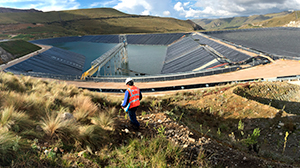
The economic analysis of the lower sector of the pit will be performed considering two alternatives. The first alternative involves the use of this depression like a rainwater reservoir lined with geomembrane. The second alternative uses the material from cut of the pit for backfilling of the depression, avoiding the rainwater storage.
For the economic analysis, actual prices will be used according to the construction practices commonly used in the project zone.