
Geomechanics
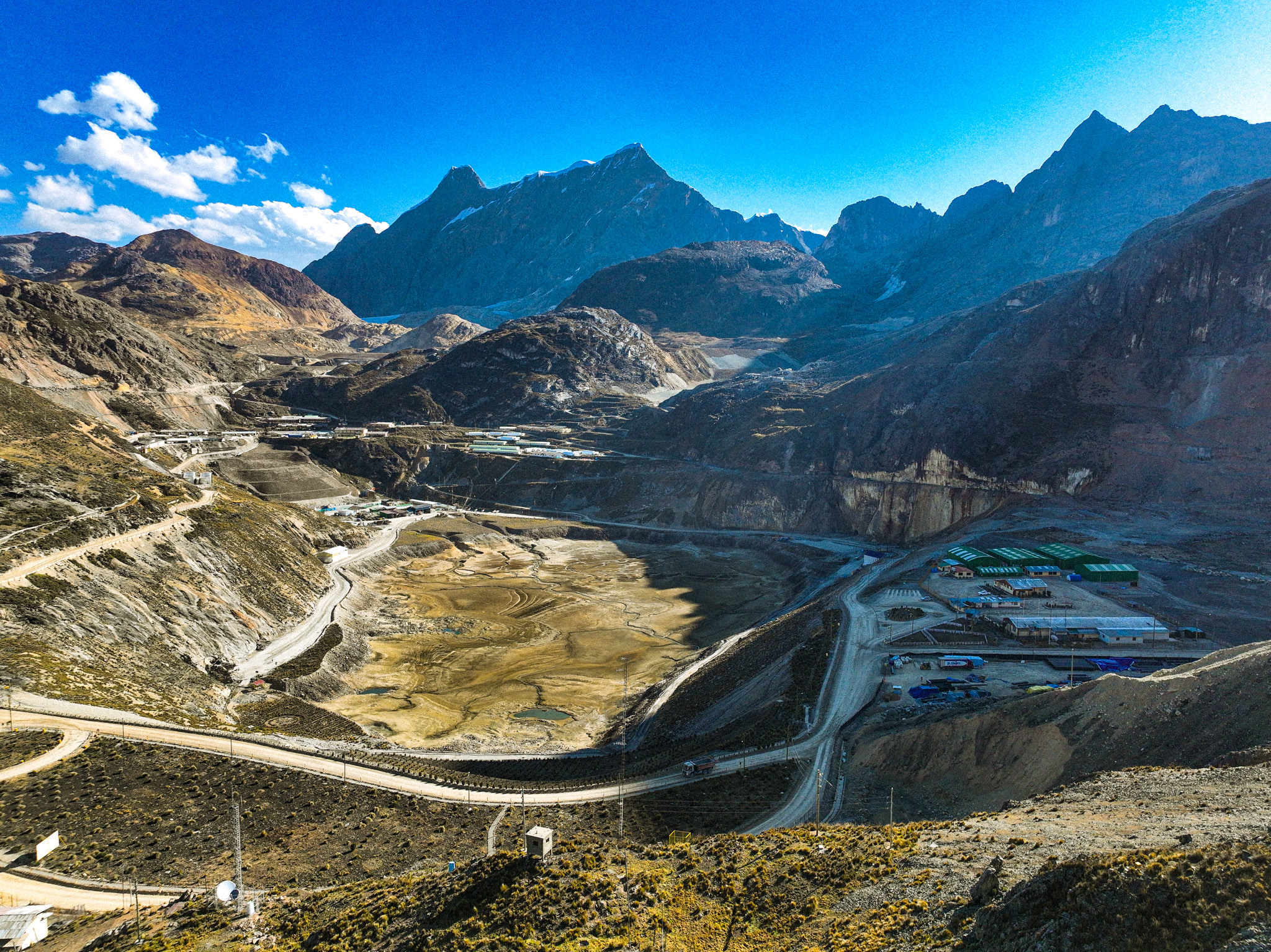
We have a team with extensive experience in geomechanical assessment for foundations, open pit slope design, and underground works.
Our geomechanics and geotechnical engineering team specializes in slope design and underground works across all project engineering stages.
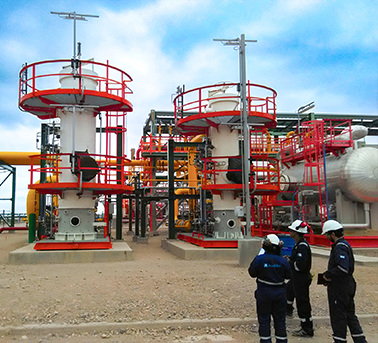
- Supervision and logging of vertical and oriented diamond drilling for surface and underground works
- Core orientation using ACT II/III, Devicore, and optical and acoustic televiewer methods
- Geomechanical and structural geological mapping, including fault inventory
- Scanline mapping and geomechanical stations using RMR76 and RMR89 classifications, Barton’s Q-index determination, and GSI estimation
- In-situ testing on rock outcrops and drill cores, including Schmidt hammer and tilt tests
In-situ testing on residual soils and Quaternary deposits, including pocket penetrometer and vane shear tests - Soil and rock sampling and laboratory testing programs
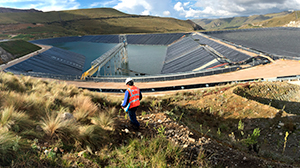
- Field inspections for the identification of instability features
- Geotechnical rock mass modeling based on geological, structural, and hydrogeological models
- Geomechanical characterization using RMR89, RMR76, and GSI classification systems
- Structural assessment
- Geomechanical zoning
- Probabilistic bench slope stability analysis
2D and 3D limit equilibrium stability analysis of rock masses and structures - Sensitivity analysis of inter-ramp slopes
2D and 3D finite element analysis - Design of open pit slopes and access roads
- Design and technical specifications for slope support and stabilization systems for pits and access roads
- Design of geotechnical instrumentation and monitoring systems
- Evaluation of pit damage induced by blasting
- Engineer of Record (EoR) services
- Pre-feasibility, feasibility, basic, and detailed engineering studies
- Geotechnical rock mass modeling based on geological, structural, and hydrogeological models
- Geomechanical characterization using RMR89, RMR76, Q, GSI, and MRMR classification systems
- Structural assessment
- Geomechanical zoning
- 2D limit equilibrium stability analysis of rock masses and underground structures
- 2D and 3D finite element analysis
- Geomechanical design of tunnels
- Design and technical specifications for ground support systems in tunnels and underground works
- Geotechnical instrumentation and monitoring
Determination of geomechanical models under in-situ stress conditions in deep underground workings - Trade-off, pre-feasibility, feasibility, basic, and detailed engineering studies
- 3D geological solid modeling
- 3D block modeling of geomechanical properties (RMR, GSI, RQD, Barton’s Q, and strength parameters)
- Processing and interpretation of 3D lithological, alteration, and structural geological models for geomechanical assessments
- Application of model results to assess open pit excavability and blasting performance
- Field data collection for the closure of open pits, adits, and shafts, including unrolled arch mapping, geotechnical–structural geological mapping, and geomechanical stations
- Design of adit closure plugs and shaft closure slabs, including site-specific design variations
- Geometric slope design for open pit closure