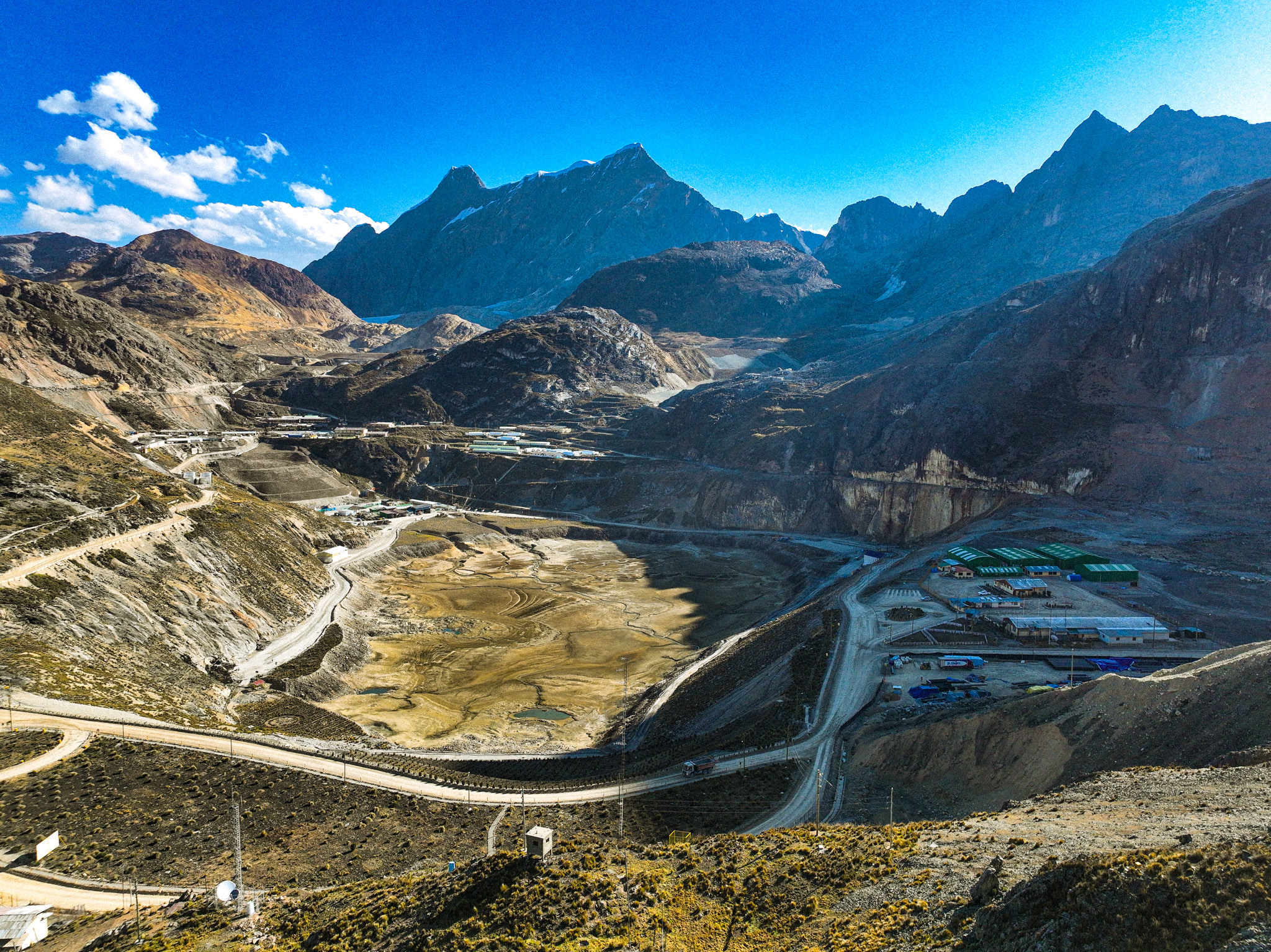
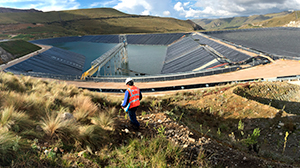
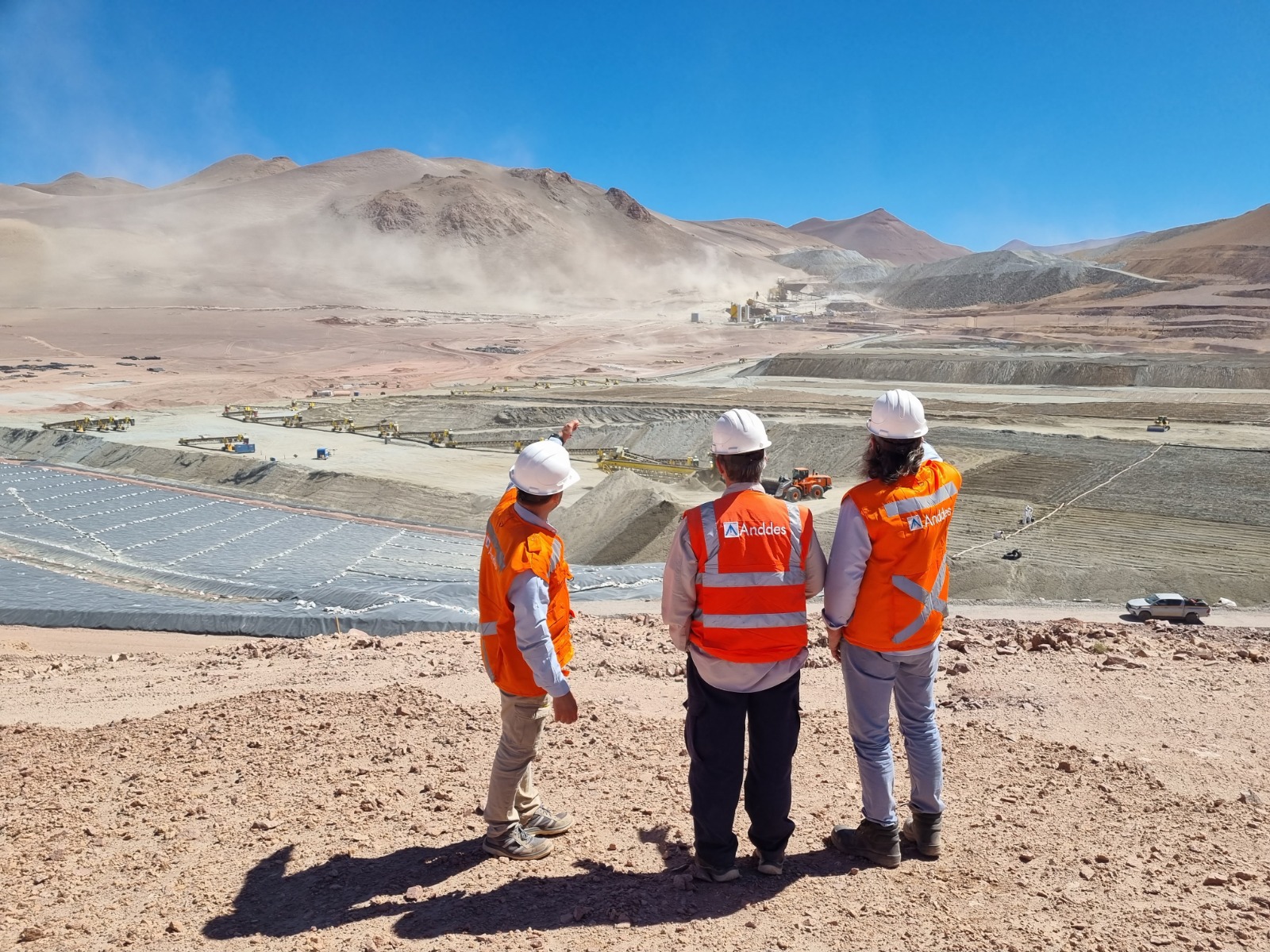
Generally, in humid climates, covers (impermeable) are used, placed on the surface of the heap with the aim of reducing the entry of rainwater into the leaching pad, and, consequently, decreasing the dilution of the solution and the surplus of water contaminated with solution that requires recirculation or treatment before being discharged into the environment. However, the potential use of these covers presented in this article, although unusual, in leaching pads located in dry climates aims to prevent evaporation from the surface of the heap and, thereby, reduce the demand for fresh water. This article presents a water balance study of a leaching pad project located in southern Peru, at an altitude that varies between 4,000 and 4,700 meters, characterized by a desert and cold climate, with little precipitation and prevalence of evaporation throughout the year, where optimization of fresh water demand is necessary. A water balance was performed to evaluate the inflow rates corresponding to precipitation on the lined area of the pad, incorporating the high residual moisture of the clayey ore and considering fresh water for replenishment. On the other hand, the outflow rates consist of evaporation in the exposed area of the ore and in the ponds, considering that there is no discharge to the environment. In order to reduce evaporation and, therefore, decrease the demand for fresh water during the operation of the pad, scenarios with HDPE geomembrane cover on the surface of the heap in the active areas under leaching were analyzed. The results indicate that, although the analyzed scenarios do not fully satisfy the water availability, the use of a cover system in 100% of the active area requires only a small increase in the availability of water compared to the scenario without a cover system, which could be satisfied with a minor effort during the required period.