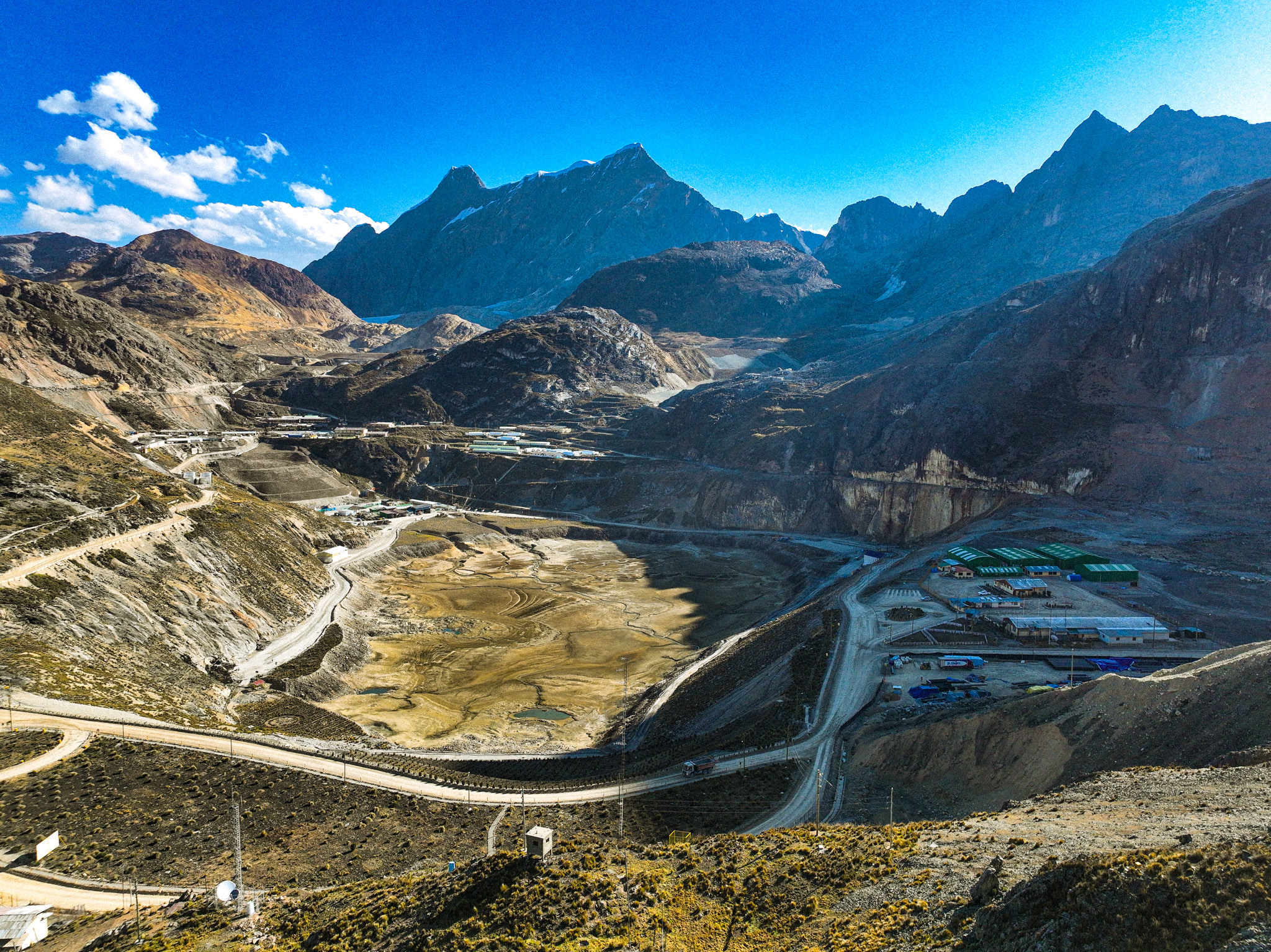
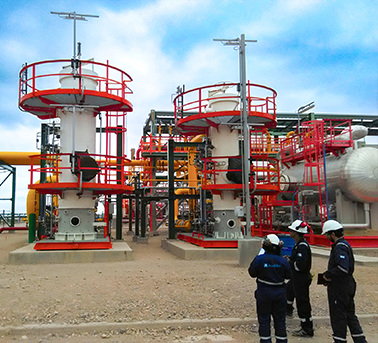

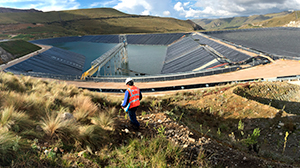
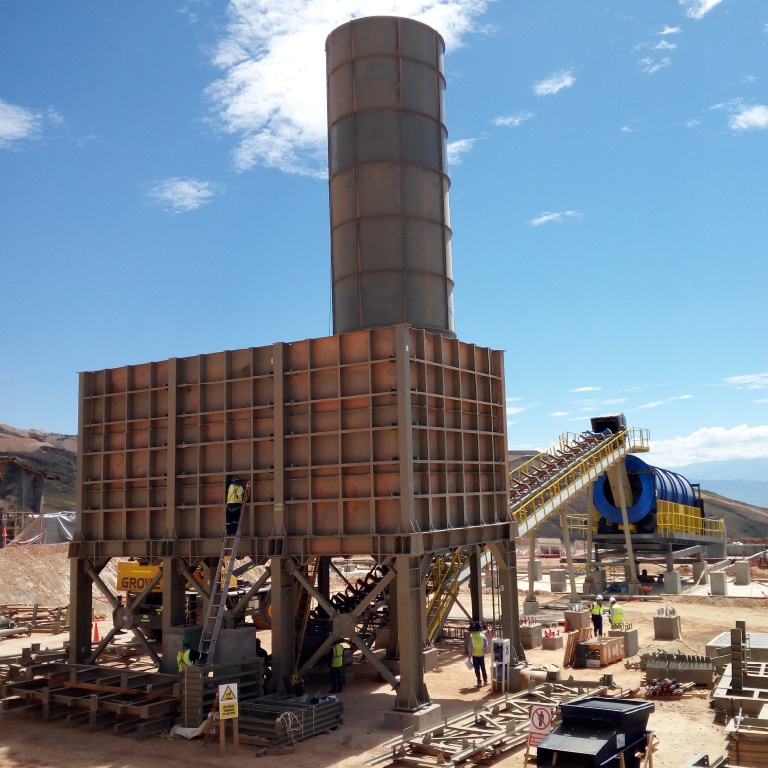
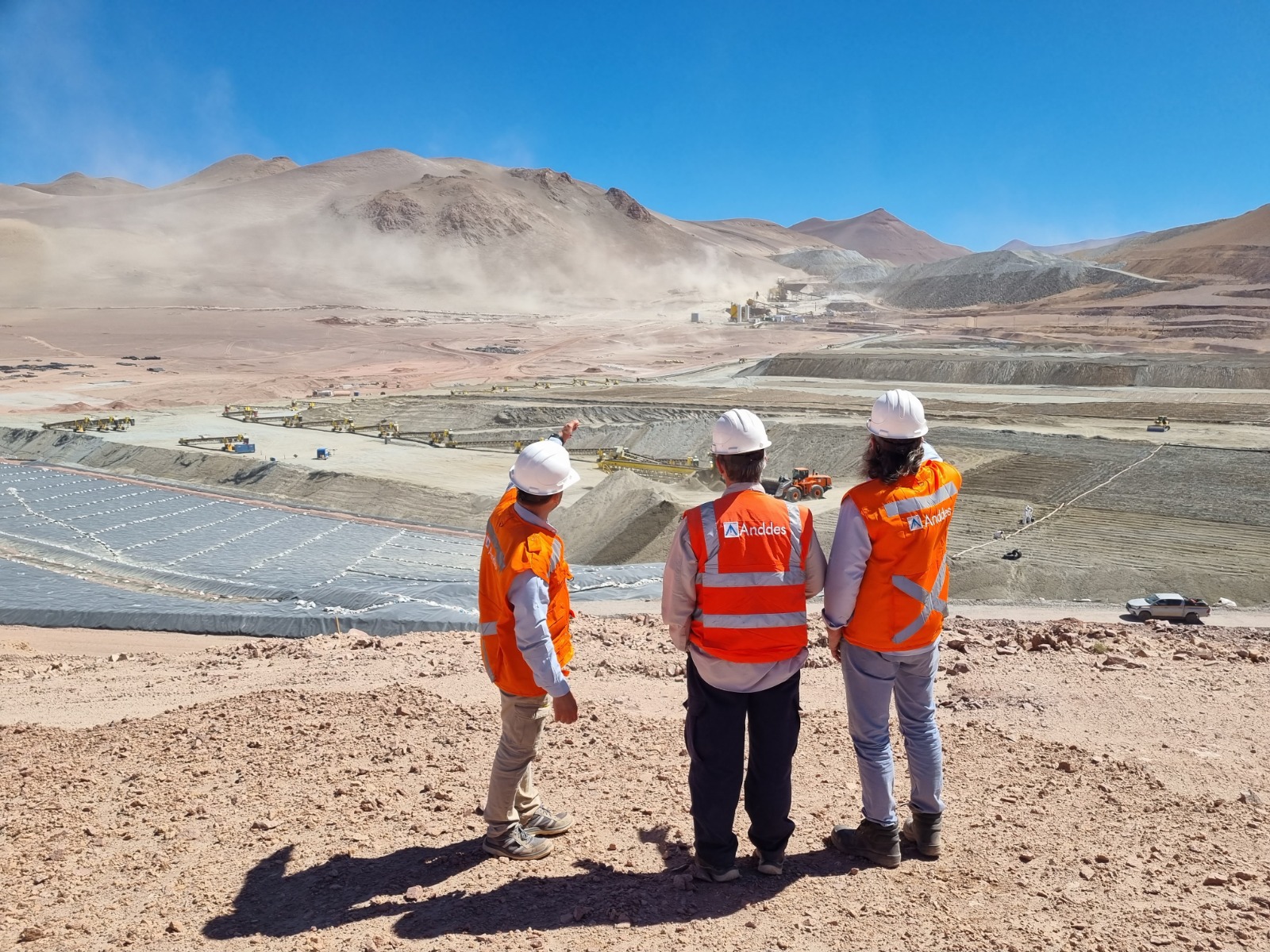
In the design of heap leach pads, it is very common to use composite liners consisting of a geomembrane over a low-permeability soil or soil liner. A granular liner is used on top of the geomembrane to prevent damage from the impact of large ore. In general, the upper interface, geomembrane versus liner or ore, will usually provide greater shear strength than the clay soil used as the soil liner due to its granular nature. Therefore, to increase the shear strength of the lower interface, a single-sided textured geomembrane is used in contact with the soil liner. The research conducted by Ayala et al. (2014), related to the relationship between the shear strength of the interface and its dependence on normal stress, roughness height, and soil liner classification, is used and expanded in this study, as a way to determine and empirically support the effects of the nonlinearity of the post-peak shear strength behavior of this type of interface. which is commonly used in heap leach projects. The following research will empirically explain the non-linear behavior of the shear stress of the interface as a function of the normal stress applied to it. A sensitivity analysis based on the 2-D limit equilibrium slope stability analysis of block failures in heap leach projects is performed based on the following criteria: heap geometry, non-linear model for the shear strength of the interface based on curves by Ayala et al. (2014), variation of roughness height, and soil classification. The variation in roughness height is a key issue added due to evidence indicating a difference between the roughness measured by the manufacturer’s quality assurance (MQA) and that measured by the control quality assurance (CQA), corresponding to a reduction in roughness in the field, which, as noted by other authors, corresponds to a decrease in shear strength. This research also adds recommendations for 2-D limit equilibrium software for slope stability analysis in leach pads when a linear interface shear strength is used.