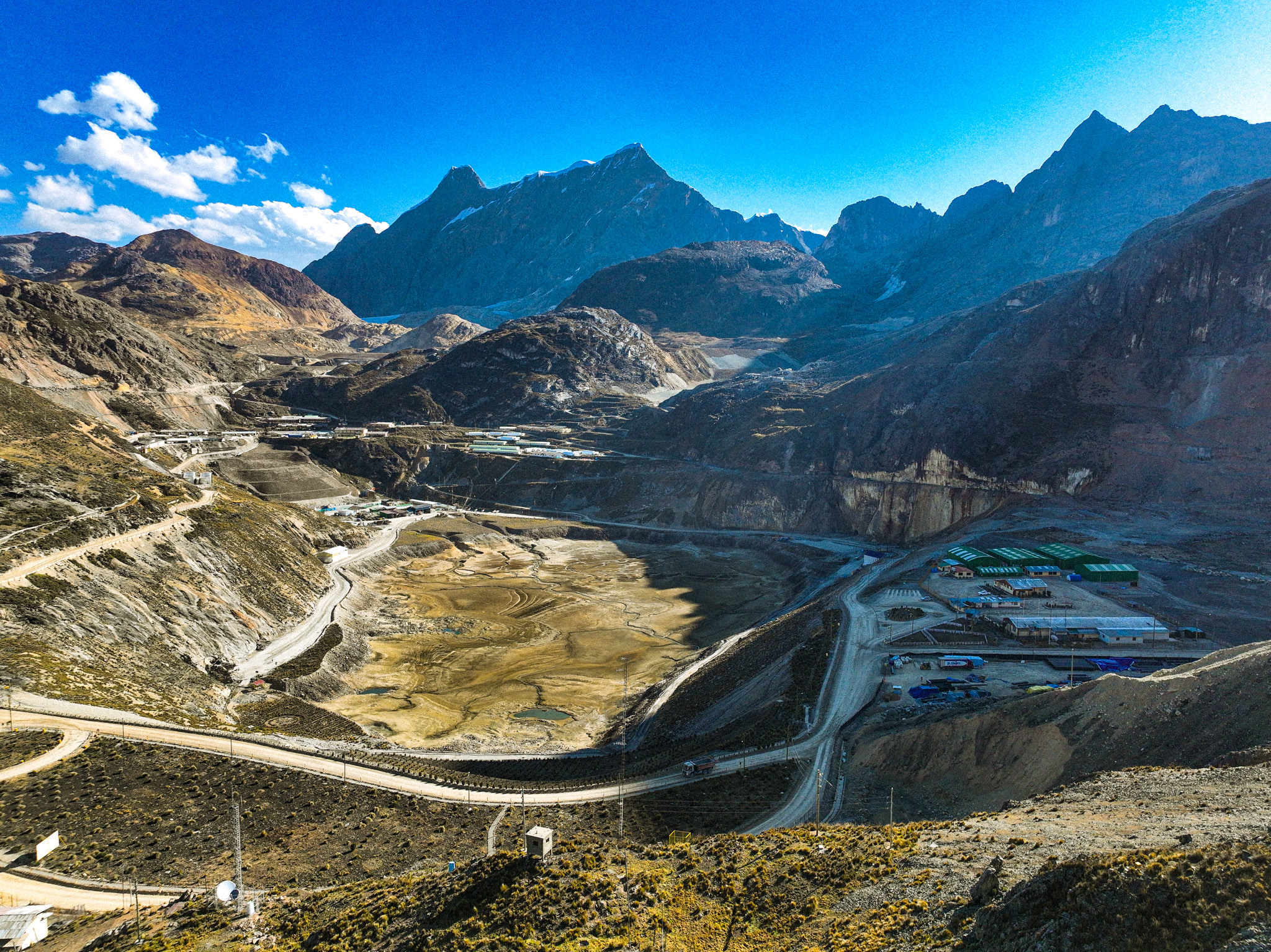
The geotechnical design of a heap leach facility generally considers a mine production plan, mineral processing information, leaching cycles, and general project site information with the aim of defining a physically stable heap geometry with the ability to allow ore stacking throughout its useful life. To meet these objectives, it is important to characterize both the shear strength and the hydraulic conductivity of the ore, especially if we have to deal with lithological variation or mineral pre-processes such as crushing and agglomeration techniques that will affect these properties. The ore from the Shahuindo open pit comes from different mineralogical alterations classified as: siltstones, sandstones, sulfides, and breccias. On which the metallurgical characterization of each lithological unit has been carried out and a suitable agglomeration technique has been identified for the fine ore, in order to improve the recovery of the Au/Ag leach solution. Column leach tests were performed to determine the recovery percentages of the ore composed of sandstone and siltstone. In addition, mixing tests of both lithologies in different proportions adding cement as a blinding agent, will justify an adequate proportional mixture and the use of the agglomeration technique to increase permeability and, consequently, increase the diffusion rate of the cyanide solution through the pores of the ore, as well as improve the physical stability of the heap. The ore identified at the site presents coarse and fine particle size distributions and a wide range of hydraulic conductivity coefficient values that make the conventional heap leach design implicated. 77 hydraulic conductivity tests were performed on leached, agglomerated and non-agglomerated ore samples from different lithologies or mixtures thereof, 59 rigid wall permeability tests and 18 flexible wall permeability tests, in order to characterize the permeability of the leached ore as a function of confining pressure. Also, 10 triaxial compression tests were performed on these samples. Finally, the hydraulic conductivity, SWCC and shear strength were obtained for different conditions and lithology of the ore from a site; In addition, liquefaction susceptibility assessments were evaluated for the ore.