Heap leach pad design has become increasingly challenging over the years in the pursuit of efficient solutions that ensure constructability, quality, and economic feasibility for this type of project. Design solutions often focus on earthworks activities, which can account for up to 70% of the total capital cost of heap leach developments.
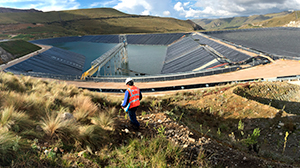
A critical factor in such projects is the presence of a low-permeability soil layer placed in direct contact with a geomembrane as part of a composite liner system. When suitable borrow material is unavailable or inadequate, one alternative is to replace the compacted low-permeability soil with a geosynthetic clay liner (GCL). A GCL is a prefabricated geocomposite consisting of bentonite or another very low-permeability material encapsulated between two geotextile layers, which may be mechanically bonded by needle punching, stitching, or chemical adhesives.
The engineering function of a GCL is to act as a secondary hydraulic barrier, with the geomembrane serving as the primary barrier. This approach is commonly implemented on steep slopes, typically steeper than 2H:1V, where the use of earthmoving equipment to place and compact soil layers is impractical, unsafe, and costly.
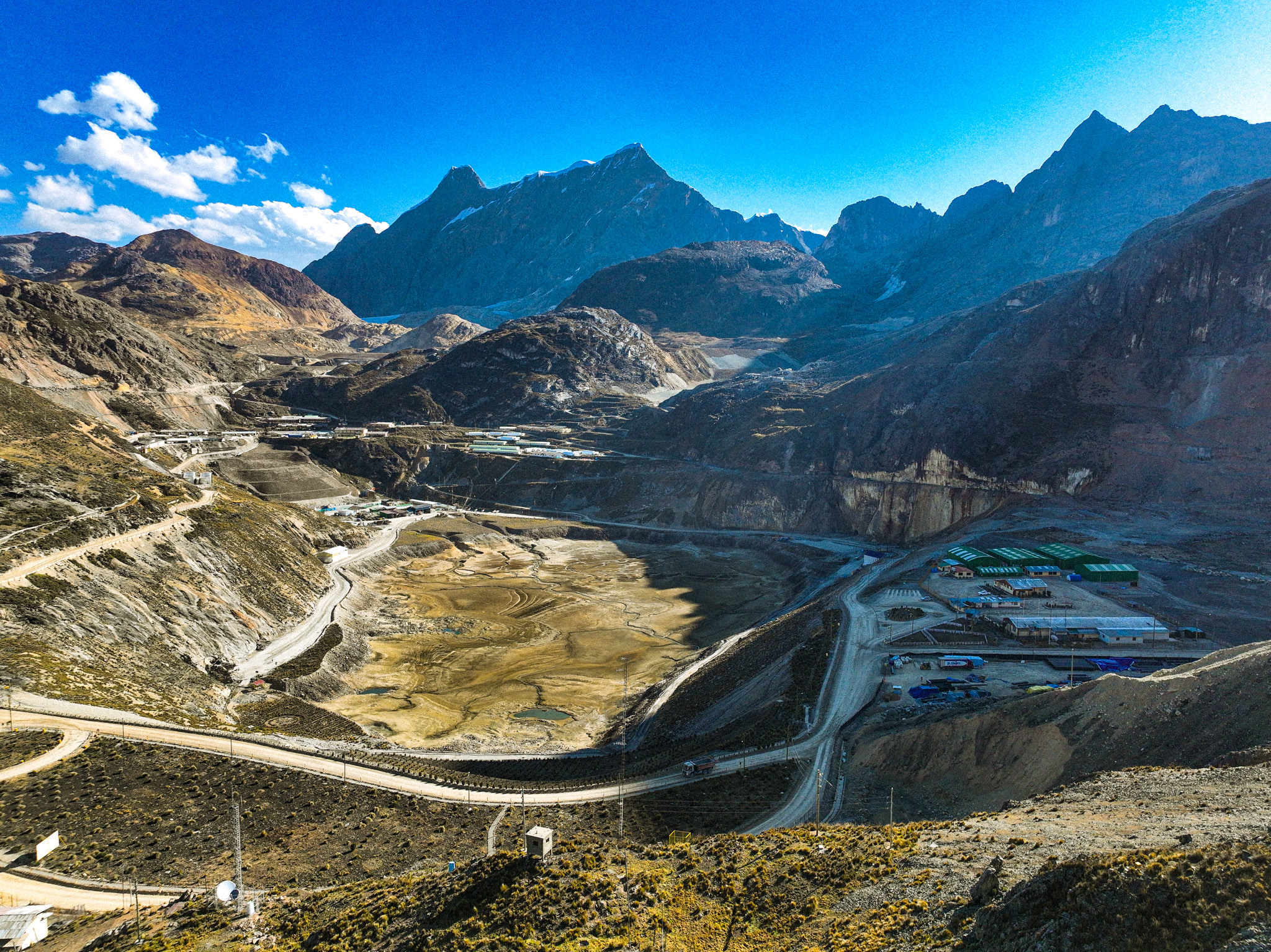
This paper discusses the advantages and disadvantages of GCL applications compared to compacted low-permeability soils in various heap leach projects in Peru and other countries characterized by very steep slopes and aggressive terrain conditions. The positive aspects of GCL implementation are also examined, particularly in terms of cost and schedule savings. In addition, design considerations are presented to optimize the hydraulic and mechanical performance of GCL installations.