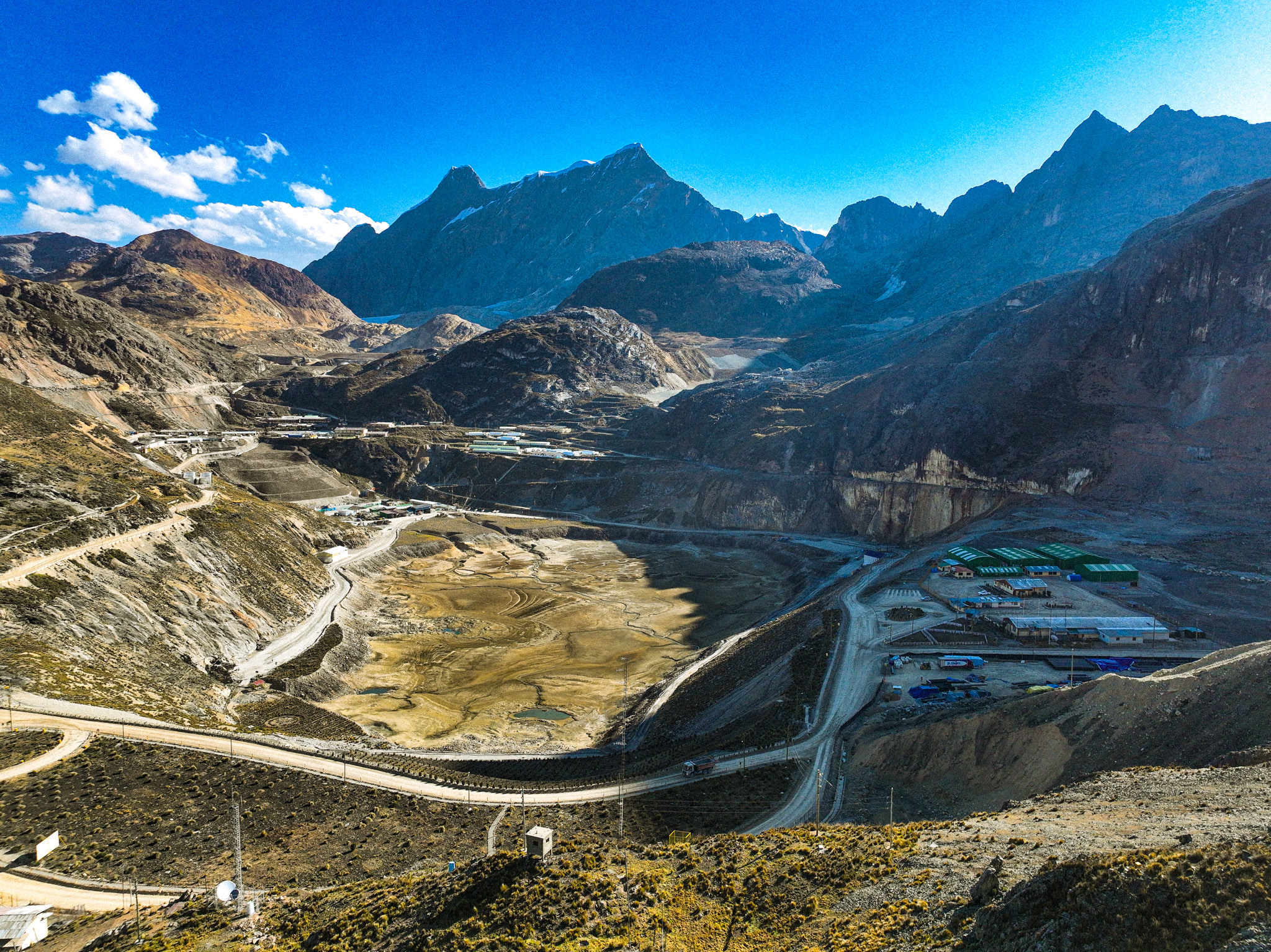

Mine operators often encounter the problem of predicting the storage capacity of tailings storage facilities (TSF) for different production schedules and mine development stages. The phenomenon of consolidation in tailings is crucial for the long-term behavior of TSFs in order to avoid overestimation or underestimation of their final storage capacity and filling time. In recent years, techniques such as finite element and finite strain methods have been widely used to determine tailings settlement due to consolidation. The two-dimensional (2D) finite element approach is generally implemented using software such as PLAXIS, while the finite strain method is based on the model developed by Gibson et al. (1964) and later expanded by other researchers. This work presents a case study consisting of the consolidation analysis and determination of the storage capacity and filling time of one of the deepest TSF projects in an open pit mine in Peru, with a maximum depth of 350 m. The analysis took into consideration the concept of tailings mass conservation and used an iterative production schedule in a PLAXIS finite element model. In addition, the three-dimensional finite strain solutions of the upper and lower bounds for the Gibson theory-based method were used for comparison purposes. Mass conservation and iterative analysis based on the finite element approach proved useful for optimizing storage capacity and filling time, design, and production schedule for the TSF. Furthermore, the results of the finite strain method allowed for a detailed comparison of the two techniques to determine the actual storage capacity and filling time of TSFs based on tailings consolidation. Finally, the magnitude of the consolidation results highlighted the importance of these analyses for a deep TSF during design and operation, even during the feasibility stages.