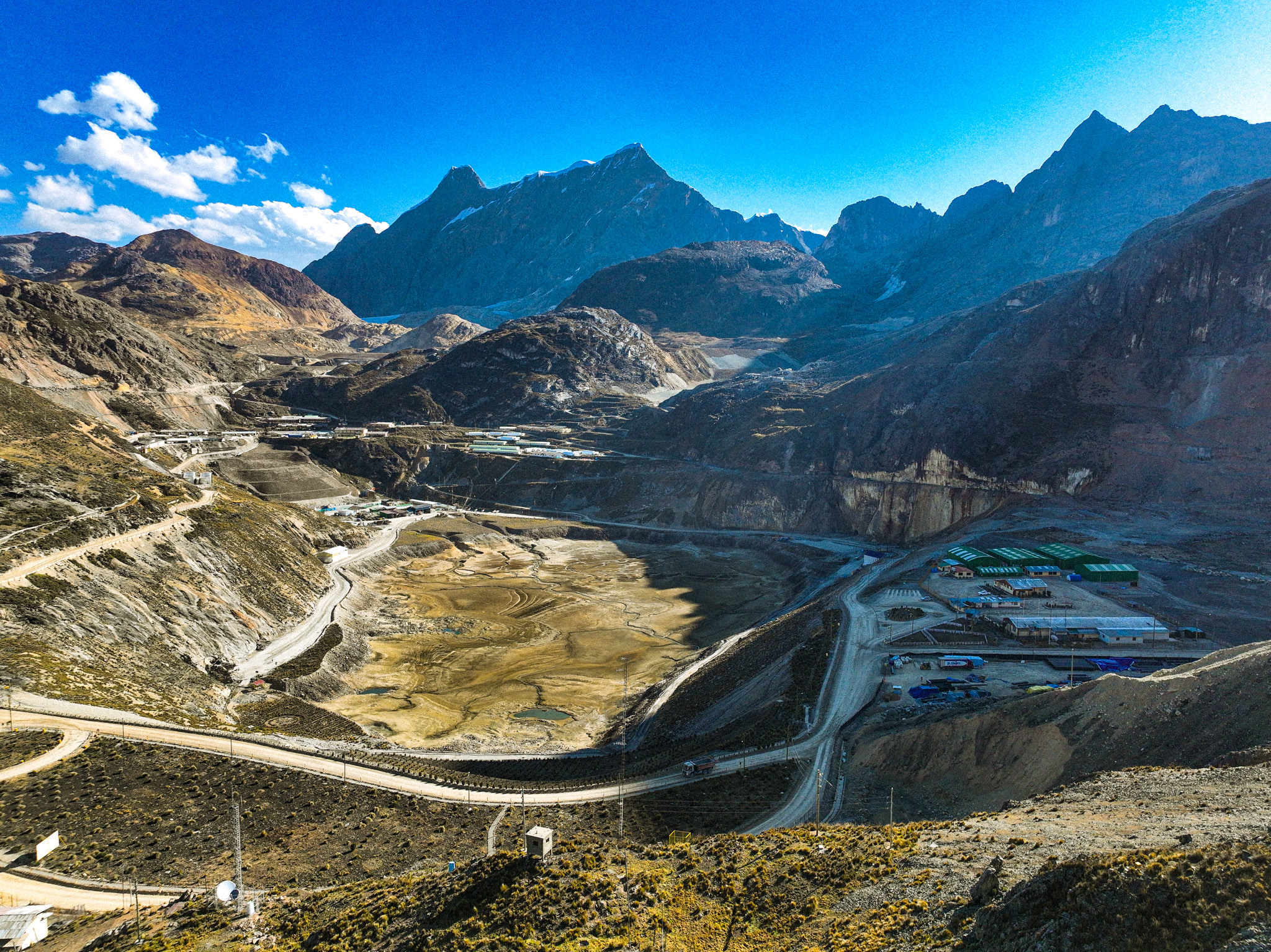
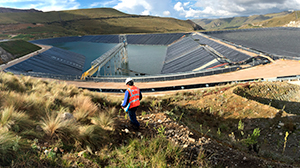
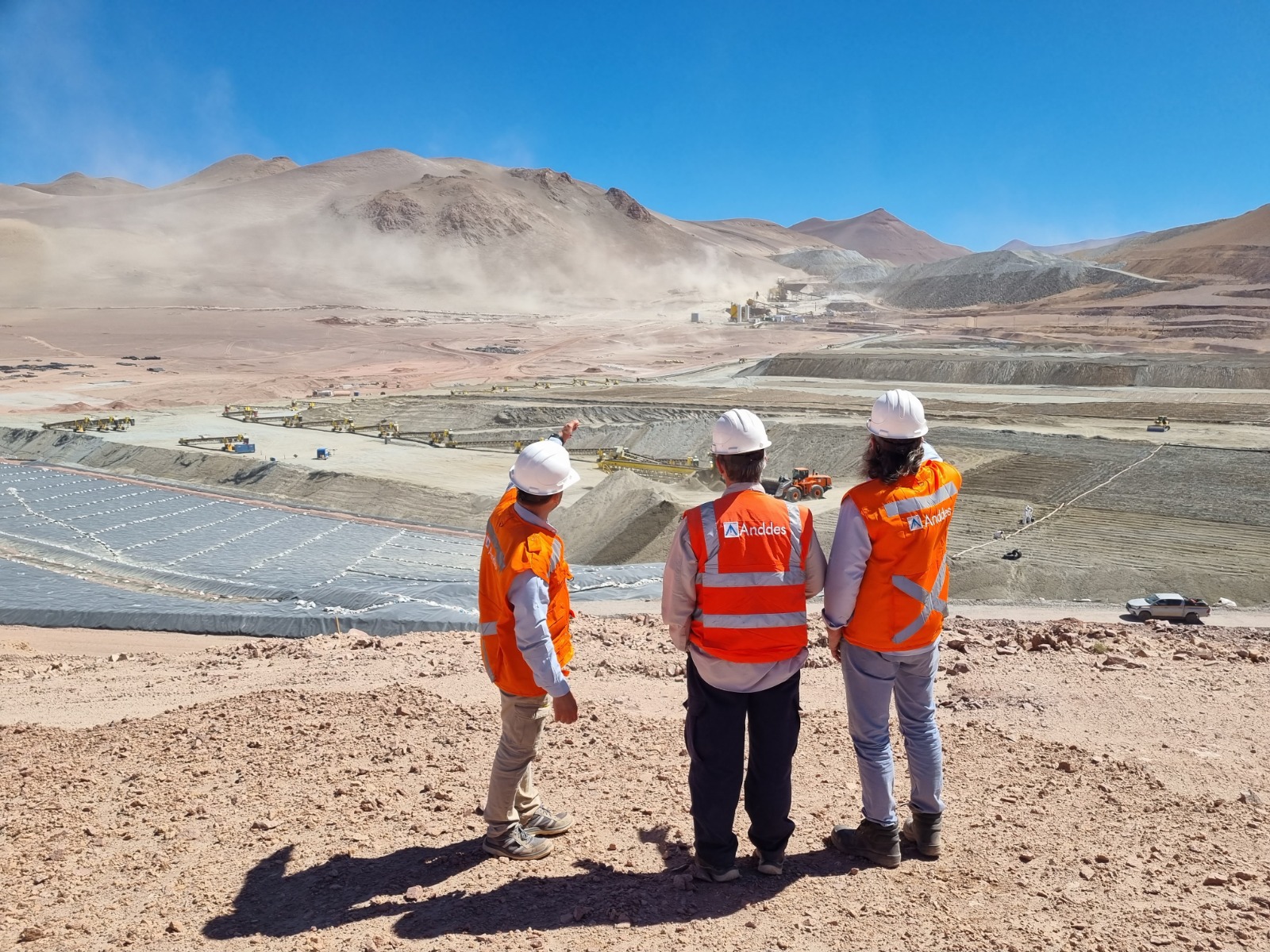
This work presents a review of the design and construction of a leaching pad located in northern Peru, based on several aspects of interest that have been observed and should be taken into account in future leaching pad projects. The review consisted of compiling engineering design and construction information (quality dossier), focusing mainly on data related to the characteristics of the soil liner and its interface with the geomembrane of the leaching pad. This review was complemented by field and laboratory investigations. The available information indicated a high variability of the soil liner in the area of origin of the borrow, corresponding to silty soils of low shear strength. In addition, there was a significant difference between the basic properties assumed in the design of the soil liner and the results of the quality dossier, which were similar to those obtained in additional tests performed as part of this review. Likewise, large-scale direct shear tests of the interface between the soil liner and the geomembrane in samples of both materials obtained in the field showed significant differences, with lower shear strength of the interface than that assumed in the design phase. During the design phase, a leaching pad condition in generally stable pads was observed, but with pseudo-static safety factors below 1, and with limited seismically induced permanent deformation under the Makdisi and Seed (1977) criterion. On the other hand, the stability analysis performed with shear strength parameters obtained through tests in in-situ conditions indicated unstable conditions of the leaching pad, with relatively low static safety factors and pseudo-static safety factors also below 1, but with seismically induced displacement to values higher than permissible under the criteria of Makdisi and Seed (1977) and Bray and Travasarou (2007); This led to the design of a buttress to obtain long-term stable conditions.