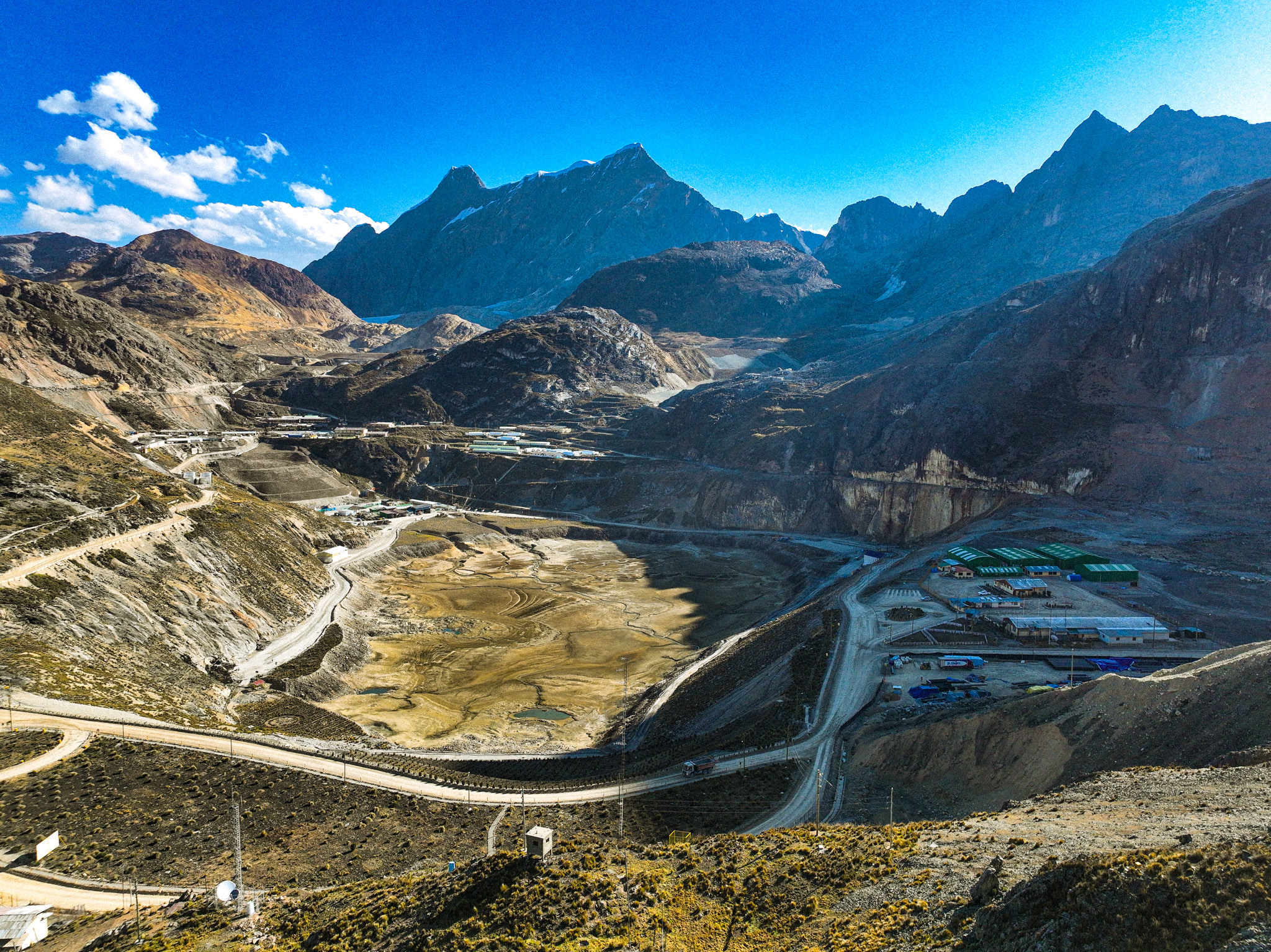
The authors addressed a challenging project in northern Peru involving a three-dimensional (3D) slope stability analysis of a mine waste dump. During the extensive geotechnical investigation program conducted for this project, it was determined that the foundation of the waste dump consisted of highly heterogeneous soil strata, most of which adversely affected the stability of the facility. As a result, certain sections were expected to exhibit high Factors of Safety (FoS), while adjacent areas could present marginal stability conditions.
To overcome this apparent instability, commercially available software was used to develop a 3D model incorporating 11 distinct soil layers and the complex geometry of the mine waste configuration. The results showed an increase of 14% to 18% in the FoS compared to the minimum two-dimensional (2D) FoS.
This difference was primarily attributed to the fact that the 3D failure surface intersected not only weak soil layers but also stronger strata, thereby eliminating the overly conservative simplifications inherent in the selected 2D cross-sections for this particular analysis. Even greater discrepancies between 2D and 3D analyses are expected in more complex cases.