

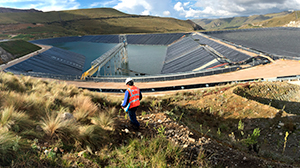
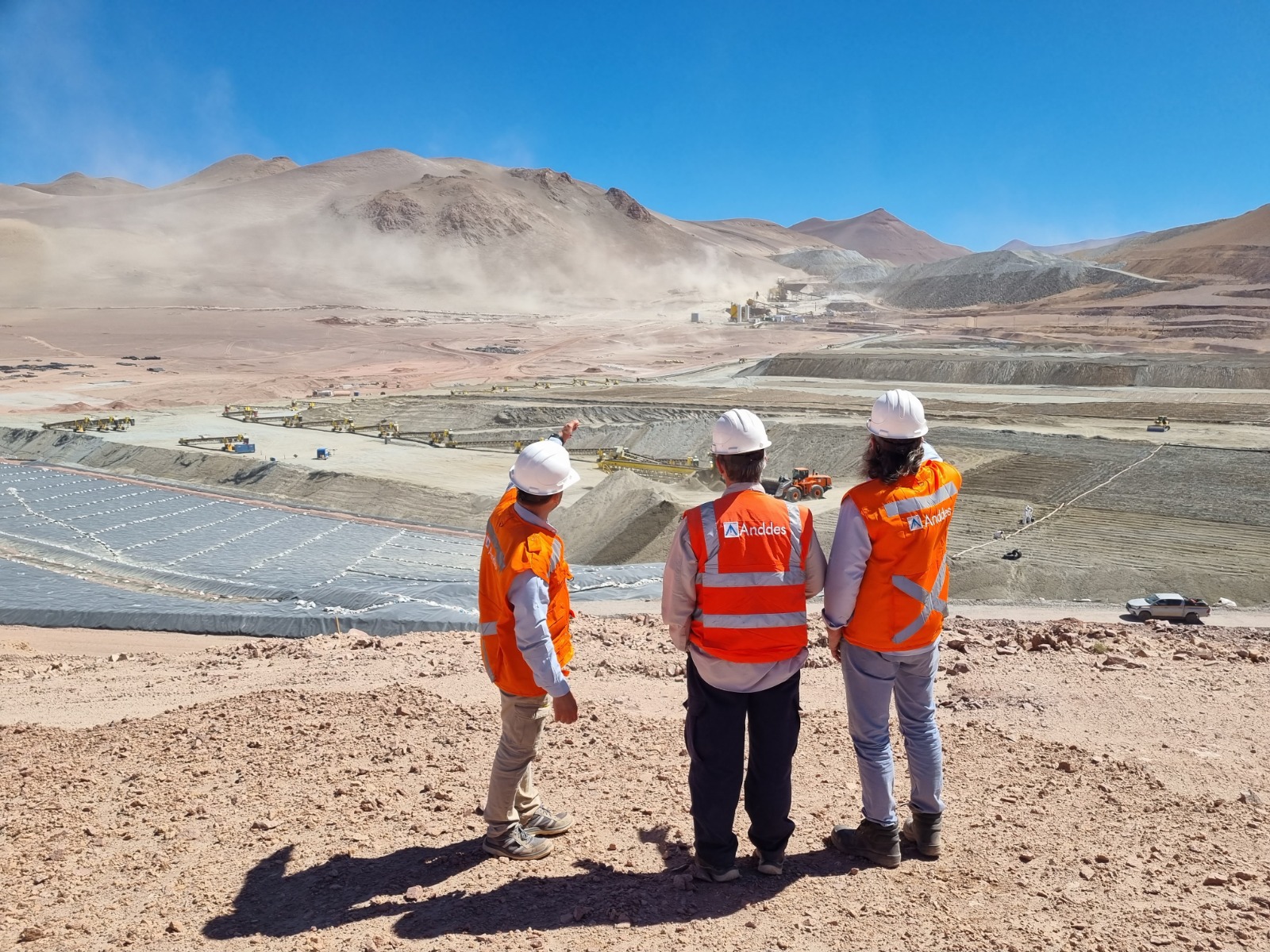
Heap leach pads are an attractive cost-benefit extraction technique for low-grade gold, silver, and copper ores around the world. In South America the complex terrain features, high altitude, extreme weather conditions, high seismic activity, and limited suitable locations impose a series of engineering constraints for designing a heap leaching operation. Therefore, one of the critical steps is an adequate field and laboratory investigation to perform an optimal geotechnical characterization to ensure a correct geotechnical and especially seismic performance.
This paper presents a practice-oriented methodology for the evaluation of the seismic performance of under-operation leach pads in a case study. Input data for this methodology consists of geotechnical investigations of the stacked crushed ore, such as test pits, geophysical surveying, and CPTu; complemented with a robust geotechnical laboratory testing program. Similar to tailings dam engineering, the crushed ore response is classified as dilatant or contractive depending on the in-situ soil behaviour, drainage (drained or undrained) conditions present within the ore; and appropriate strength parameters corresponding to each type of ore are assigned.
This approach allows one to characterize a heap leach pad, identifying areas of material with contractive or dilatant behavior. Further, the assessment of the liquefaction potential is performed on the locations where CPTus are available, and a combination of CPT triggering procedures and specific site response analyses is suggested to this end. With this information, the geotechnical characterization is complemented by assessing the liquefaction potential of the crushed leached ore within the heap leach pad.