

From your experience, what are the key factors for achieving a successful mine closure?
Mine closure management encompasses a wide range of aspects, from permitting and geotechnical or hydraulic design to stakeholder engagement, including communities and mine workers.
In this sense, proper medium- and long-term closure planning is essential—planning that identifies the risks and opportunities associated with ceasing operations of the mine or any of its main facilities or components. Only in this way can we achieve a successful closure that is safe, stable, non-polluting, and socially validated.
How can Anddes generate greater value for mining companies in the planning and execution of mine closure?
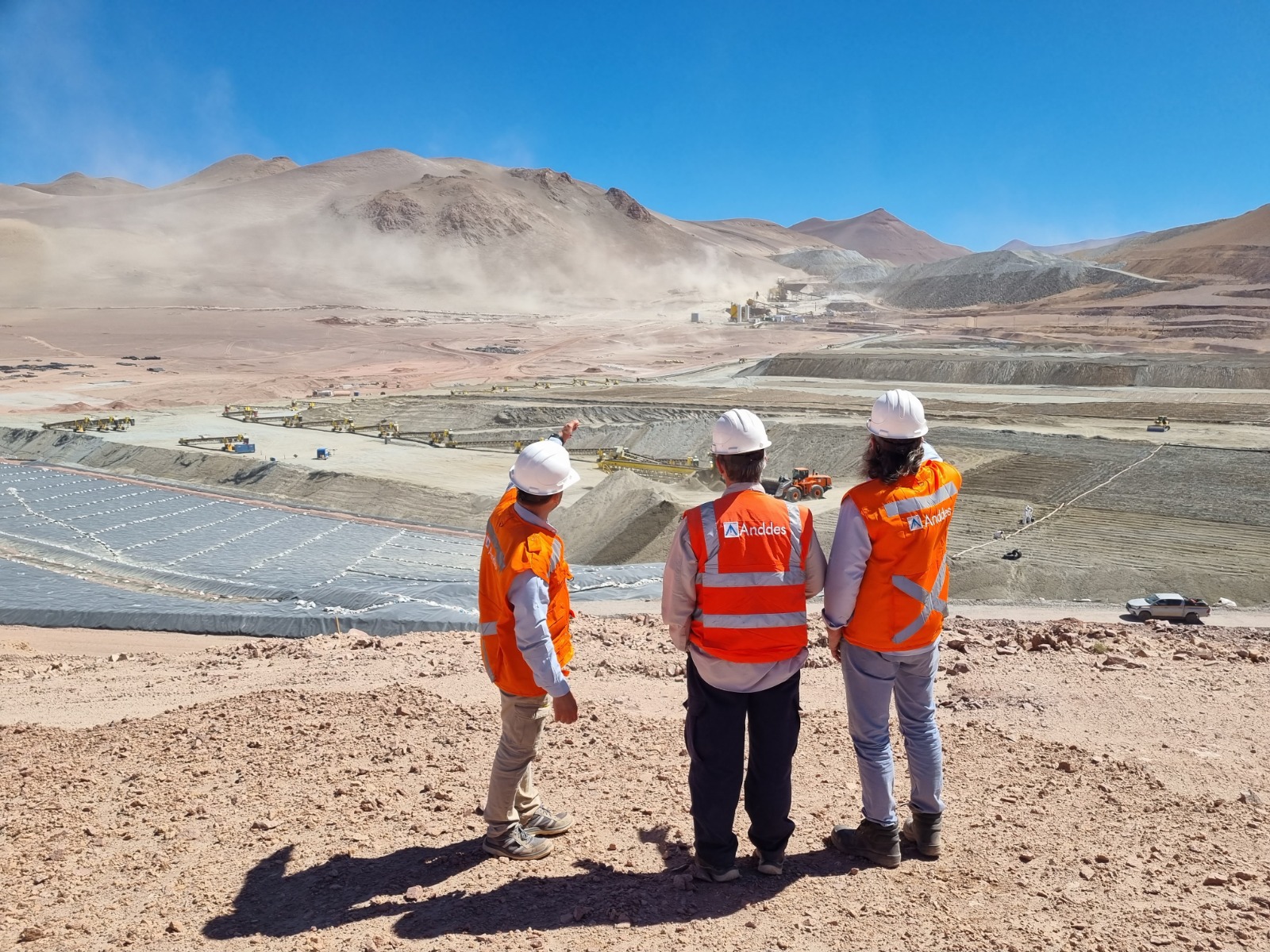
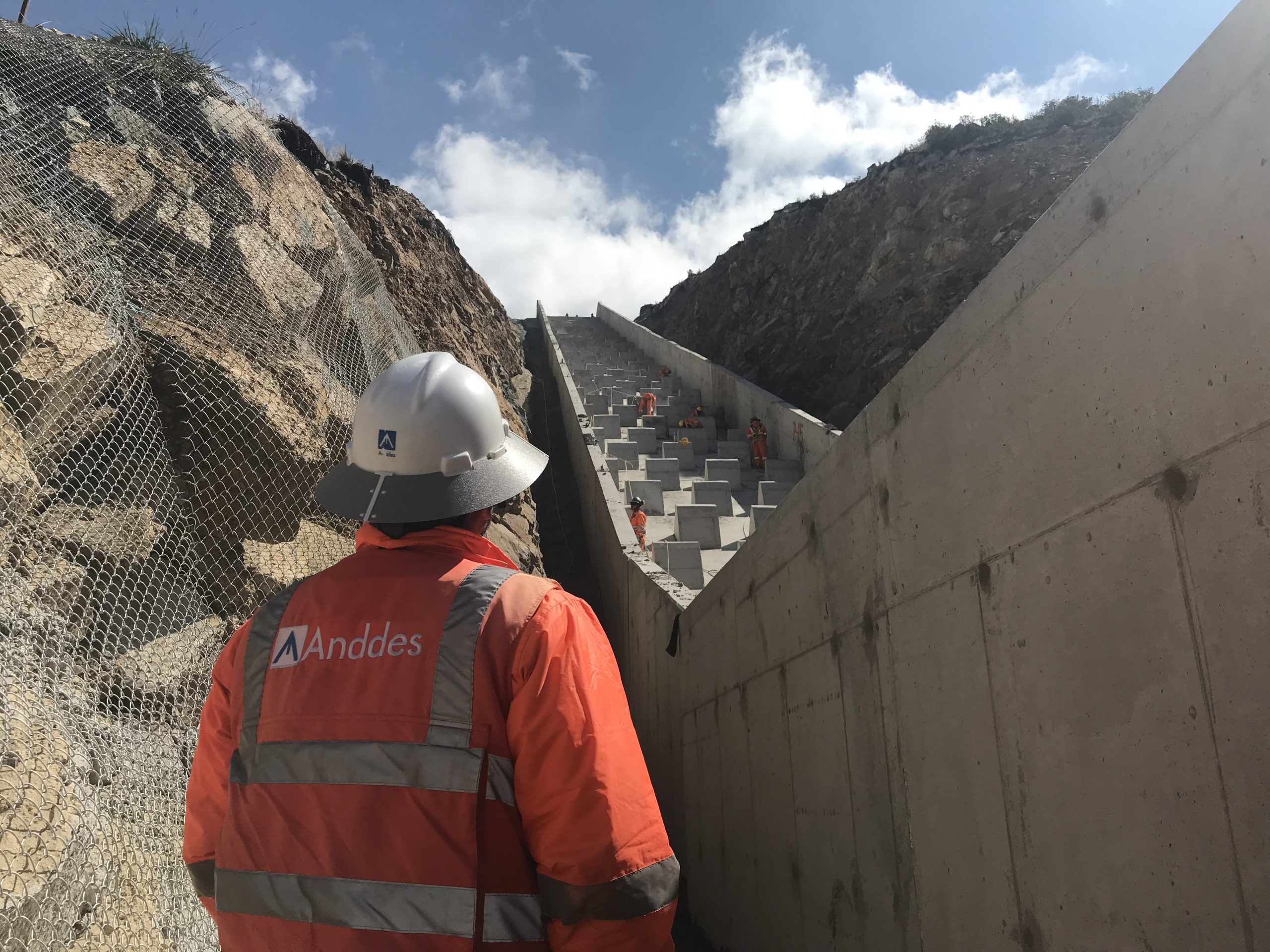
We are a team of more than 650 professionals dedicated to providing consulting, engineering, and construction services related to mine closure. We have the capabilities and experience to support our clients in the challenges involved in closure planning and execution, including permitting management.
We have developed hundreds of projects for the mining industry in the region, covering the entire life cycle—from design and construction to operation, closure, and post-closure.
What are the main challenges currently facing the mining industry in the region regarding mine closure?
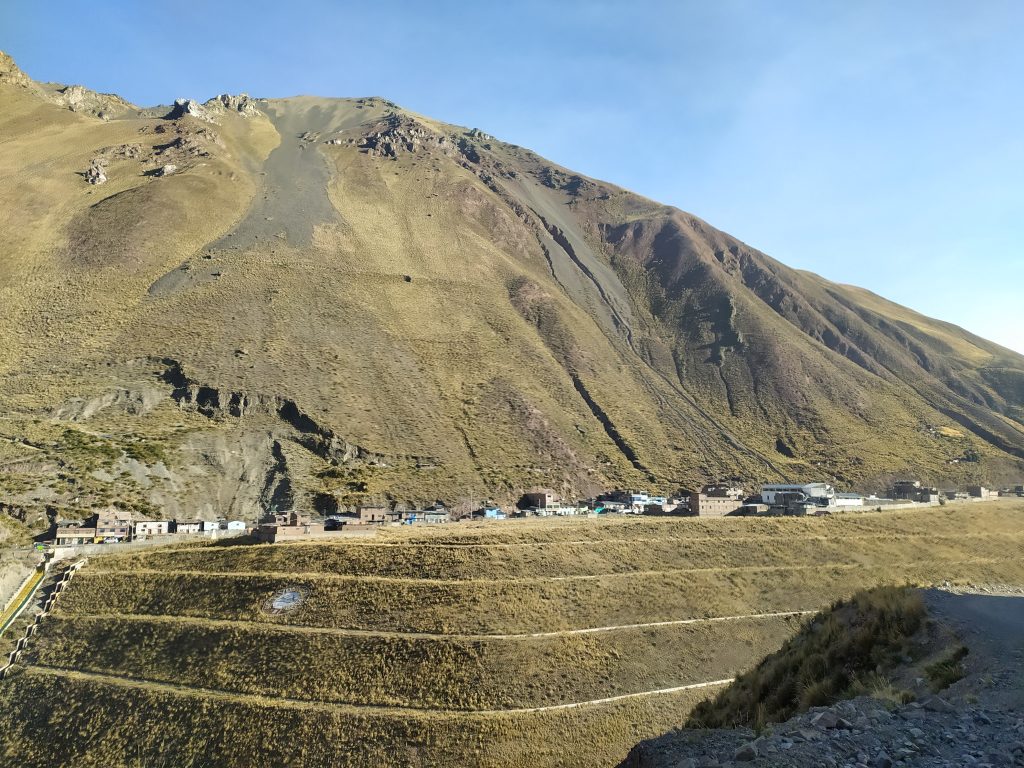
There are very few successful closures worldwide, so we face challenges similar to those in other regions, with the particularities of our countries. Probably one of the most important challenges is to move beyond mere regulatory compliance as the minimum acceptable standard toward a comprehensive closure approach, based on risk and opportunity management, that enables technically, environmentally, and socially successful outcomes.
What concrete practices or solutions can be implemented to improve sustainability in mine closure projects?
From our perspective, a solid knowledge base enables robust engineering design tailored to the specific needs of each mining operation. Subsequently, proper quality assurance and construction control are essential to ensure a sustainable mine closure, integrating social closure elements in a timely manner—without which a closure cannot be considered successful.
As a speaker at the 2nd Mine Closure Congress, representing Anddes, what is your vision or what expectations do you have regarding the exchange of experiences and learnings in this space?
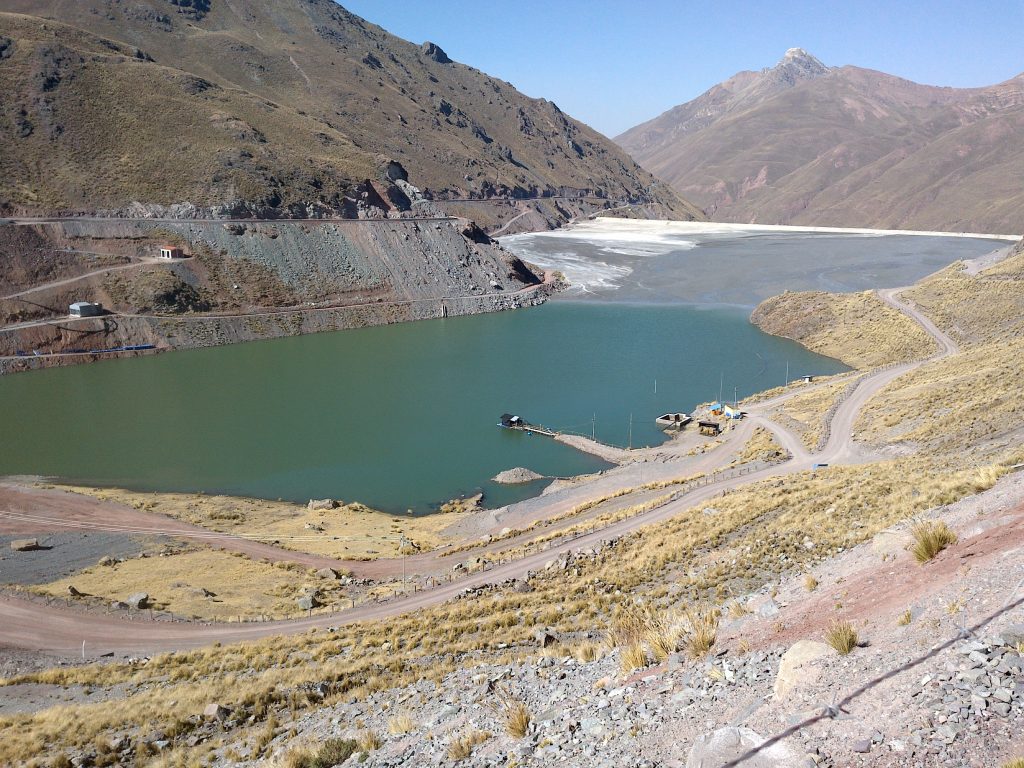
The Mine Closure Congress is an excellent platform primarily for sharing experiences. Peru leads the region in terms of the actual execution of closures, so sharing what has worked—and perhaps what has not—represents a significant contribution to closure practices.
We are pleased to share, essentially, how we have approached these processes and how we believe they can be improved. Considering that mining is the main economic activity in countries such as Peru and Chile, and also highly relevant in Mexico, Brazil, and soon Argentina—just to name a few that will surely be present at the Congress.
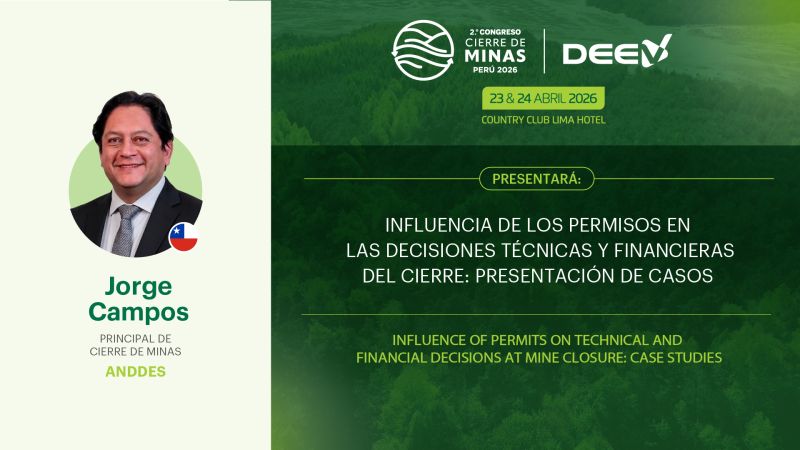
In this context, as part of this exchange space, Anddes will present a talk led by Jorge Campos, Principal of Mine Closure, titled “Influence of Permitting on Technical and Financial Closure Decisions: A Case Study.” This presentation aims to contribute, based on experience, to the technical discussion within the sector by sharing concrete insights on how permitting management influences decision-making and the outcomes of closure processes. It will take place on April 23 and 24.
We invite all professionals in the sector to be part of this space, share experiences, and join the conversation on the challenges and opportunities of mine closure in the region.