

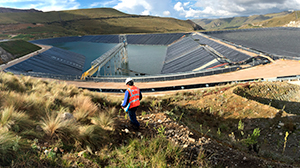
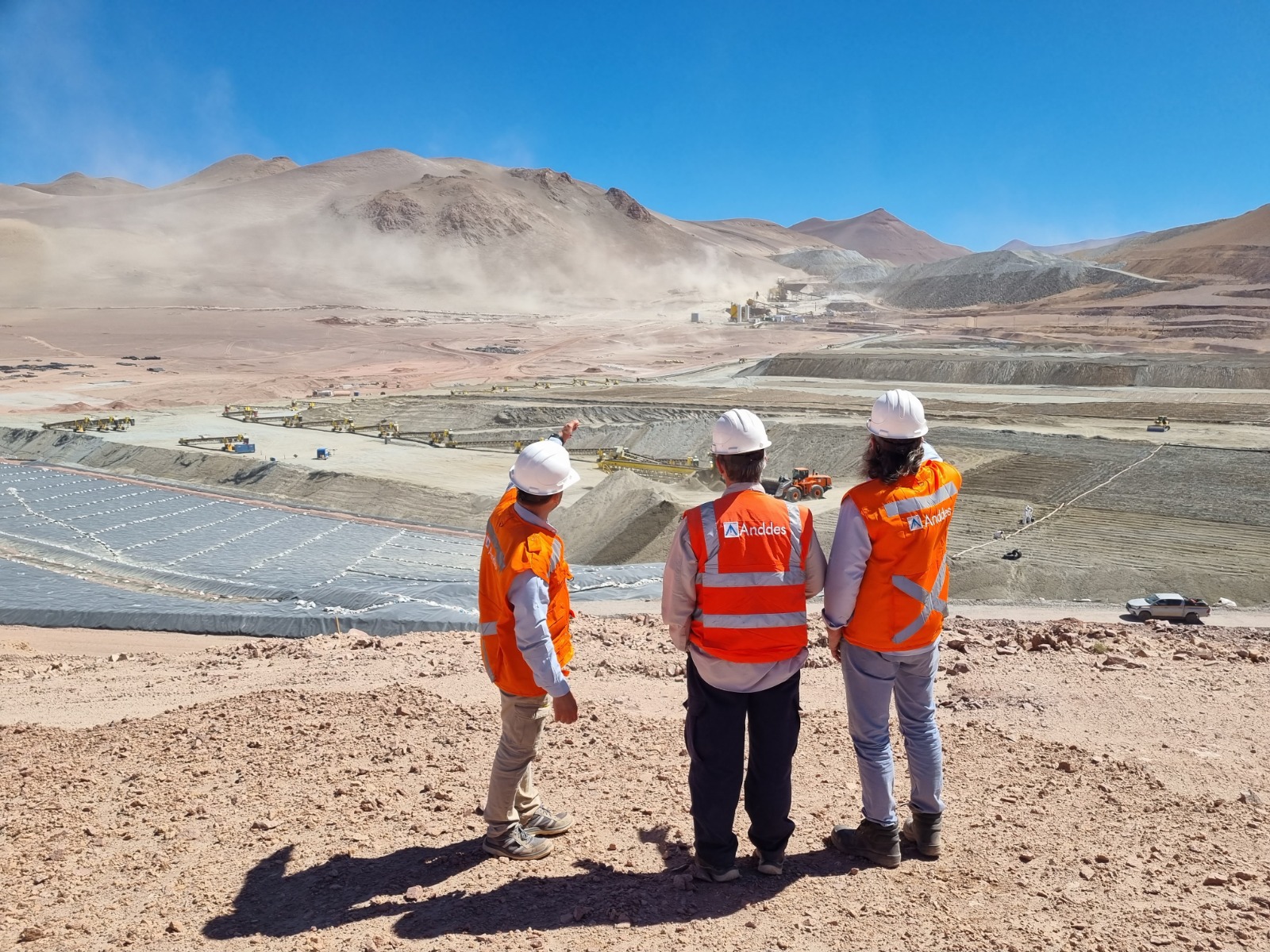
The seismic design of leach pads in regions with high seismic activity has generally been performed using pseudo-static analysis. However, new methodologies have been studied that focus on determining permanent displacements induced by earthquakes; the general concept of seismic design of a heap leach project has shifted to specific allowable levels of displacement instead of a factor of safety (FOS). Heap leach pads and their liner system are considered more sensitive to seismically induced displacements than other mining facilities due to the potential for geomembrane tearing during seismic events. This article presents a case study of a heap leach pad where seismically induced displacements were calculated through rigid block, decoupled, and coupled procedures. The authors use a large set of geotechnical information, including state-of-the-art characterization of the static and dynamic properties of the leached ore, advanced constitutive models, and other geotechnical details. The analyses suggest that more research is needed to adequately evaluate the dynamic parameters of the leached ore, which are critical in calculating the permanent displacements induced by earthquakes of the translational sliding mass of the heap. The analyses showed good correlation between the results of Bray and Travasarou (2007) and finite element methods; the latter validated an optimization of the original design of the heap leach studied. This research suggests that the seismic design of leach pads should focus on determining permanent displacements induced by seismicity, rather than focusing on pseudo-static FOS, unless a rational criterion is used to define the seismic coefficient.